
Blog
C&I Energy Storage Investment Traps: What to Avoid Before You Sign the Contract
Across manufacturing plants, logistics hubs, shopping centers, and commercial campuses, businesses are deploying commercial energy storage systems at an accelerating pace, driven by rising electricity costs, grid instability, and attractive incentive structures.
However, with fast-growing markets come fast-moving sales cycles. And in that rush, many commercial and industrial (C&I) project managers sign contracts before they fully understand what they’re committing to. The result: systems that underperform, costs that balloon, and ROI timelines that stretch far beyond initial projections.
This article will highlight the five investment traps in C&I energy storage and show you how to avoid each one before you put pen to paper.
Trap 1: Underestimating Total Cost of Ownership (TCO)
The most common mistake C&I buyers make is evaluating a storage system purely on its upfront capital cost. The purchase price is visible. Everything else — and there is a lot of “everything else” — tends to stay hidden until after the contract is signed.
True TCO for a commercial energy storage system includes ongoing operations and maintenance (O&M), periodic component replacements, grid interconnection fees, insurance, and software licensing. These costs accumulate quietly over a 10–15 year project life and can significantly erode the returns that looked so attractive in the initial proposal.
What to do: Require vendors to provide a full lifecycle cost model, not just a capital quote. Ask specifically about annual degradation rate guarantees, replacement cycle assumptions, and what is and is not covered under warranty.
Trap 2: Mismatched System Sizing
Bigger isn’t always better, and smaller isn’t always cheaper in the long run. Both oversizing and undersizing a commercial energy storage system hurt your payback period, just in different ways.
An oversized system ties up capital in capacity you’ll never use. An undersized system fails to cover your peak demand windows, leaving demand charges on the table and reducing the arbitrage opportunity the project was designed to capture.
Sizing a C&I storage system correctly requires a thorough analysis of your load profile: when your peaks occur, how long they last, and how they shift across seasons. A system that can’t adapt to these variations will always be working at a suboptimal point.
What to look for: Flexible configurations that let you right-size from the start and scale up as your needs grow. Solutions that support your required discharge durations, combined with modular designs that allow expansion, give you the architecture to match your actual load rather than forcing your load to fit the product.
Trap 3: Overlooking Safety and Certification Standards
In the race to close deals, some vendors downplay or obscure the safety credentials of their systems. This is a trap that carries consequences far beyond financial loss.
Deploying a commercial energy storage system without recognized third-party certifications creates liability exposure, can void your property insurance, and in some jurisdictions, may prevent grid interconnection entirely. Certifications like UL9540A, VDE 4110, and appropriate IP ratings for enclosure protection are evidence that a system has been independently tested under failure conditions.
What to do: Request the actual certification documents, not just marketing claims. Verify the certifying body is recognized in your jurisdiction. Ask specifically how many layers of fire protection the system includes and what triggers each level.
Trap 4: Ignoring Use-Case Flexibility
Many buyers select a commercial energy storage system for a single purpose (typically peak shaving or self-consumption) without thinking about what else the system could be doing. This single-use mindset is expensive.
A well-designed C&I storage system can support peak shaving, demand charge reduction, time-of-use arbitrage, self-consumption optimization, microgrid operation, and fast frequency response. Each of these represents an additional revenue stream or cost-reduction pathway. A system that locks you into one mode leaves the others on the table.
What to ask: Can this system be configured and reconfigured across multiple use cases as my energy strategy evolves? What is the process for updating its operating strategy as tariff structures change?
Trap 5: Neglecting Maintenance Complexity and Downtime Risk
A commercial energy storage system that sits offline for maintenance or repair isn’t generating savings. Downtime has a direct cost, and systems with complex, labor-intensive maintenance requirements erode the profitability that looked solid on paper.
High-maintenance designs, such as those requiring frequent manual coolant checks, complex servicing access, or specialist technicians for routine tasks, add up in both time and money over a multi-year deployment. In remote or space-constrained sites, maintenance friction is even more pronounced.
Equally important is the vendor’s support infrastructure. A product is only as reliable as the after-sales ecosystem behind it. Vague warranty terms, slow response times, and limited spare parts availability are warning signs that often only become apparent after the contract is signed.
What to evaluate: Look for systems with maintenance-reducing design features — automated fluid management, intuitive access for routine checks, and remote monitoring capabilities that allow issues to be diagnosed before they become outages. Scrutinize warranty terms: what is covered, for how long, and what is the guaranteed response time for service calls?
WHES PC-G2: A System Designed to Avoid These Traps
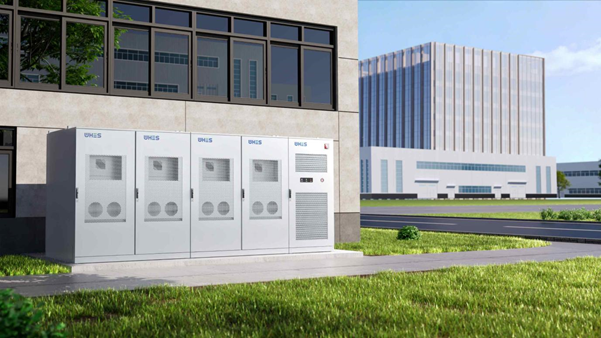
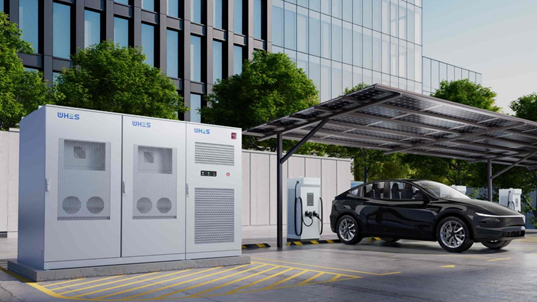
The WHES PC-G2 250kW/509kWh C&I Energy Storage System is purpose-built to address the risks outlined above — from cell quality and certification depth to maintenance simplicity and deployment flexibility.
- Certified cells for reliable TCO modeling.The PC-G2 is powered by CATL 306Ah long-life battery cells, delivering 10,000+ cycles with a designed service life of over 10 years (SOH ≥70%). Backed by UL9540A battery pack certification and compliant with VDE 4110 grid interconnection standards, providing an independently verified performance baseline for long-term financial modeling. AI-enhanced BMS monitoring (±3% accuracy) and uniform thermal control help minimize degradation over time.
- Flexible sizing and scalability. Its modular AC/DC architecture supports 2 to 8-hour flexible configurations, with up to 6 units deployable in parallel for a total capacity of 1.5 MW/3 MWh. This enables precise right-sizing at installation and straightforward expansion as load requirements grow.
- Multi-level safety protection.The PC-G2 features a three-layer fire protection system (detection, suppression, and isolation), along with UL9540A certification, ensuring validated safety performance under real-world conditions. Combined with an IP67-rated battery pack, IP55-rated cabinet, IP65-rated PCS, and C5 anti-corrosion treatment, engineered for demanding industrial environments, coastal sites, and outdoor installations.
- Multi-scenario use-case support.Powered by the WHES OS energy management system, the PC-G2 dynamically optimizes charge and discharge strategies in real time. It supports peak shaving, valley filling, renewable smoothing, self-consumption, time-of-use arbitrage, and demand response across changing tariff structures.
-Low maintenance burden.A patented wall-mounted liquid cooling module with automated fluid refill reduces both O&M time and unplanned downtime.
Conclusion
The commercial energy storage contract you sign today will govern your project’s performance for the next decade or more. For those who demand lifecycle cost transparency, verified certifications, proven quality, and performance guarantees that hold vendors accountable, contact WHES today.