
Blog
Best Commercial Energy Storage Systems for Solar Retrofit
Businesses are increasingly adding battery energy storage systems to protect operations from outages, improve solar self-consumption, and lower electricity costs. But with dozens of commercial ESS now on the market, finding the right fit can be overwhelming. This article examines five energy storage systems that stand out for their performance, reliability, and value, helping you find the best energy storage system for your business needs.
Key Takeaways
- WHES PC-G1
- Sungrow PowerStack 255CS
- AlphaESS STORION-H30/H50-G3
- Tesla Megapack
- BYD Chess Plus
WHES PC-G1
The WHES PC-G1 is a 100 kW/233 kWh all-in-one energy storage system designed for commercial and industrial applications. It integrates BMS, EMS, HV Box, CATL battery packs, liquid cooling, and PCS into a single cabinet. This all-in-one design reduces sourcing complexity and cuts deployment timelines. Its compact cabinet also gives more flexibility at sites with limited equipment space.
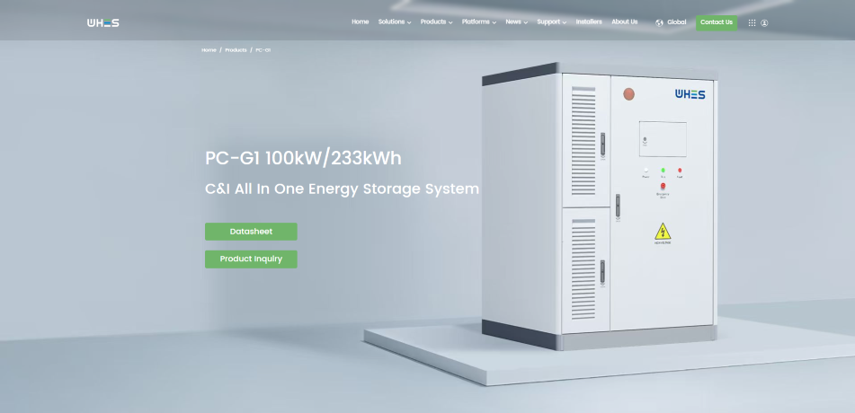
The PC-G1 holds certifications or registrations across multiple European countries, Australia, the United States, South Africa, and other markets. Its compliance coverage includes requirements for grid connection, battery safety, electrical safety, and electromagnetic compatibility. For businesses, this broad coverage can reduce compliance uncertainty and support fast deployment of commercial solar retrofit projects across different regions.
The built-in WHES OS EMS connects the hardware to the project’s financial goals. It can coordinate solar output, battery state of charge, site demand, load forecasts, and electricity prices. This supports practical strategies such as peak shaving, solar self-consumption, and time-of-use optimization.
For example, the EMS can reserve solar energy during low-demand periods and discharge it when tariff rates or facility demand rise. It can also adjust priorities when production requirements change. This helps the energy storage system respond to real site conditions instead of relying only on a fixed daily schedule.
In general, the PC-G1 is a strong option for commercial solar retrofits.
Sungrow PowerStack 255CS
The Sungrow PowerStack 255CS ST510CS-4H provides 125 kW of rated AC output and 514 kWh of battery capacity. It uses liquid cooling and achieves system round-trip efficiency above 90 percent.
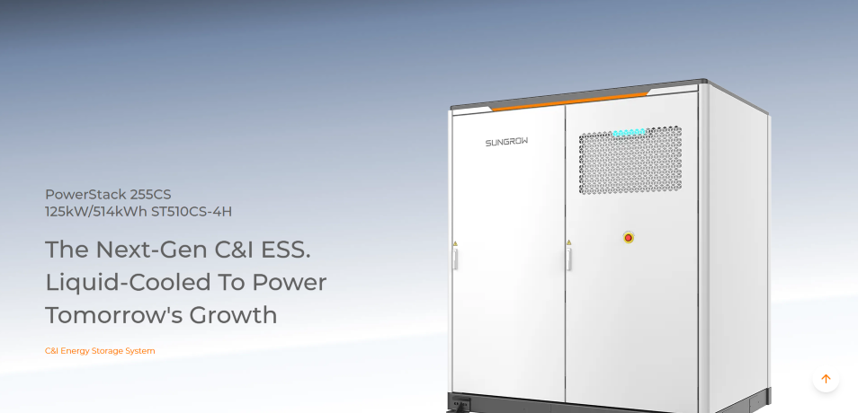
Its flexible cabinet arrangements support side-by-side, back-to-back, and face-to-face placement, which can help businesses work around existing site constraints.
The iSolarCloud platform provides access to both PV and storage data. This gives operators a coordinated view of the entire solar energy storage system.
AlphaESS STORION-H30/H50-G3
The AlphaESS STORION-H30/H50-G3 offers 30 kW and 50 kW power options, with capacities from 72.3 to 241 kWh.
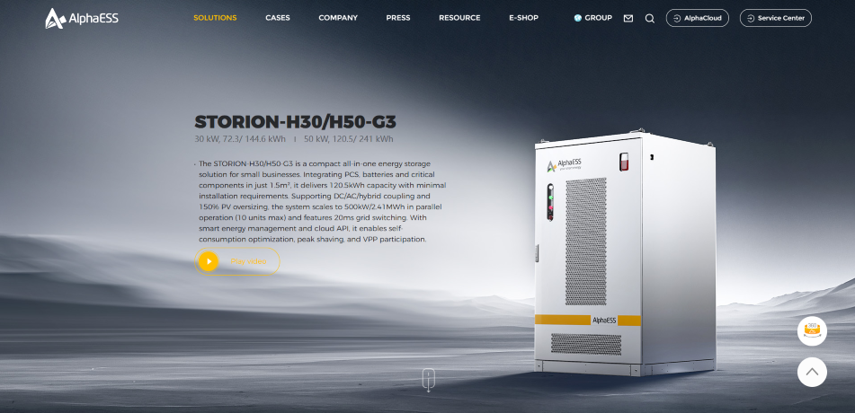
It can support for DC coupling, AC coupling, and hybrid coupling. This flexibility helps designers match the storage architecture to the existing installation instead of forcing one standard approach.
The compact cabinet occupies about 1.5 square meters and supports up to ten units in on-grid parallel. It starts at a relatively small scale and expands as site demand changes.
Tesla Megapack
Tesla Megapack addresses campuses, data centers, large industrial facilities, and utility-scale solar projects. It integrates battery modules, bidirectional inverters, thermal systems, and controls. This factory-integrated format can reduce the complexity of a multi-megawatt retrofit compared with a system assembled from many separate components.
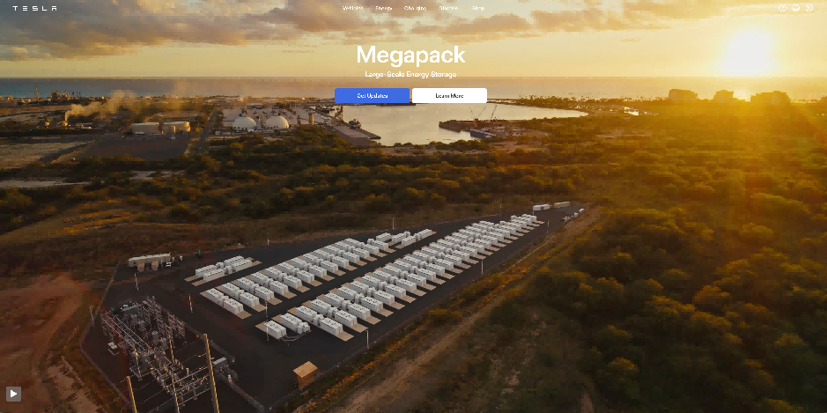
Its scale allows large facilities to shift substantial amounts of solar energy, support critical loads, or participate in grid services. Powerhub provides site control, while Autobidder can support energy-market activity where local rules permit it.
BYD Chess Plus
BYD Chess Plus provides 125 kW of power and 233 kWh of capacity per unit. Its modular architecture supports projects from 125 kW to 1 MW, which makes it useful for businesses that expect their storage requirements to increase.
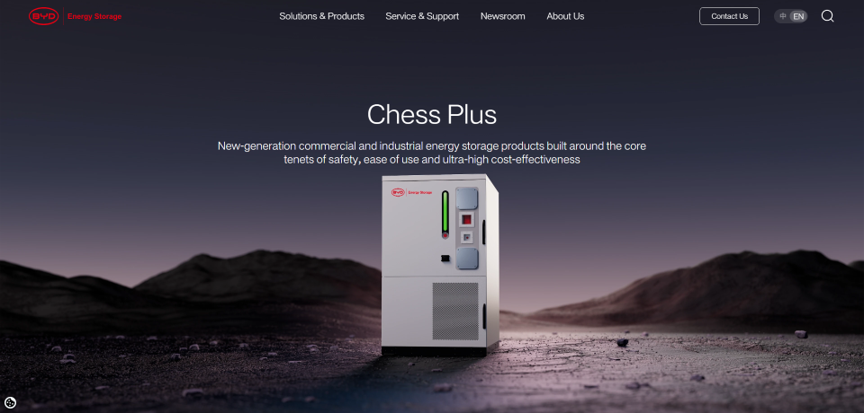
A site can deploy one unit for initial peak demand reduction or solar energy transfer, then add units as production capacity, EV charging demand, or PV capacity grows. This phased approach can help a business align capital expenditure with actual energy needs.
The system uses liquid cooling for its batteries and controlled forced-air cooling for electronic equipment. Its applications include solar-plus-storage-and-charging sites, industrial parks, and microgrids.
Conclusion
No single battery suits every commercial property. Before selection, businesses should compare the existing solar architecture, load profile, tariff structure, available space, backup requirements, grid connection, and local safety rules. A well-matched solar energy storage system can raise solar self-consumption and give a commercial PV asset a more useful role throughout the day.