
Blog
What Is the Role of Battery Energy Storage System in a Microgrid?
A microgrid is a localized energy network that combines power generation, electrical loads, control equipment, and energy storage. It can operate either in parallel with the utility grid or independently in islanded mode.
A battery energy storage system (BESS) plays a key role in both operating states, as well as in the transition between them. It can support the utility grid during grid-connected operation, maintain stability during islanded operation, and enable a smooth transition between the two modes, while optimizing energy use throughout.
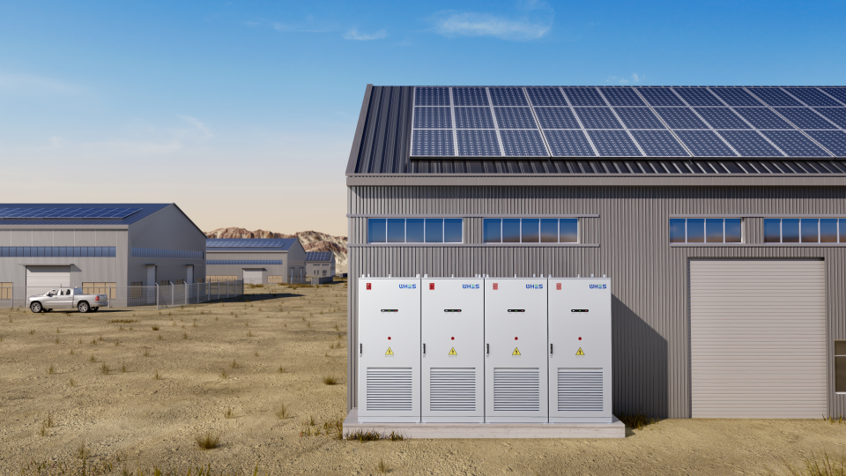
1. Energy Optimizer
Under an intelligent energy management strategy, the BESS can charge when electricity prices are low or renewable generation is abundant, and discharge when prices or demand peak. This enables peak shaving and load shifting, which help reduce electricity costs.
The BESS can also absorb excess solar or wind power and release it when renewable output falls short. This increases the share of renewable energy that the microgrid actually uses. In islanded operation, it helps reduce the fuel consumption and run time of diesel generators, which lowers operating costs.
2. Grid Support Resource
In a grid-connected microgrid, the BESS can respond to utility grid requirements through its power conversion system (PCS). Subject to available converter capacity, battery state of charge, and applicable interconnection requirements, it can provide frequency regulation and voltage support by controlling active and reactive power, helping maintain power quality at the point of common coupling (PCC). It also makes the power exchange between the microgrid and the utility grid more predictable.
3.Grid-Forming Resource
When the main grid fails or the microgrid is intentionally disconnected, a BESS equipped with a grid-forming PCS can operate as a voltage source and establish the voltage and frequency reference for the microgrid. Through control strategies such as droop control or virtual synchronous machine control, it responds to changes in load and renewable output and helps maintain voltage and frequency stability.
If the microgrid suffers a complete blackout, the BESS can also serve as the initial power source for black start. It can energize the local network and create the conditions needed to bring other distributed energy resources, such as PV systems and diesel generators, back online in stages.
4.Seamless Transition Enabler
When the islanding switch opens, a BESS in grid-forming mode, whether it switches from power-control mode or has been operating in grid-forming mode throughout, continues to hold the voltage and frequency, so the loads do not experience a break in supply. It immediately picks up the power that was previously exchanged with the utility grid, absorbing surplus power or discharging to cover a shortfall within milliseconds.
In planned islanding, the BESS can first adjust its output so that the power exchange with the utility grid approaches zero before the switch opens, which minimizes the disturbance. The same capability also helps the microgrid reconnect later, as the BESS can adjust its voltage, frequency, and phase to match the utility grid.
Which Supplier Provides Reliable BESS Solutions?
Selecting an experienced supplier is essential to ensuring that a BESS performs reliably. In addition to battery capacity and power ratings, buyers should consider system integration capabilities, energy management software, safety design, technical support, and experience with different application scenarios.
WHES provides intelligent BESS solutions for commercial and industrial applications. Its integrated solutions combine battery systems, power conversion equipment, and the WHES OS energy management system to support applications such as renewable energy integration, peak shaving, and backup power.
With projects deployed across more than 50 countries and regions, WHES also provides regional technical and after-sales support. For microgrid developers and operators, this combination of integrated hardware, intelligent energy management, and lifecycle service helps simplify system deployment and support reliable long-term operation.
Conclusion
As renewable energy continues to grow and users place higher demands on power reliability, a battery energy storage system is becoming a core part of microgrid design. Its value depends not only on how much energy it can store, but also on how it is controlled. WHES provides reliable BESS solutions that help microgrids operate more efficiently, flexibly, and resiliently. Contact our team today to discuss your requirements.