
Blog
Best AI-Powered Energy Management Systems for C&I Applications
Volatile electricity prices, intermittent solar generation, and unpredictable demand create energy management challenges for commercial and industrial facilities. Manual energy management and fixed operating strategies are often unable to respond quickly enough to changing tariffs, production loads, weather conditions, and power requirements.
AI-powered energy management systems offer a more effective solution. They can forecast energy generation and consumption, optimize battery charging and discharging, and automatically adjust operating strategies as conditions change. This enables businesses to reduce electricity costs, improve renewable energy utilization, and maintain a more reliable power supply.
Still, the performance of energy management systems can vary. Choosing the right EMS is a key decision for any project. This article highlights three notable AI-powered energy management systems for C&I applications: WHES OS, BYD DiCS-EMS60, and Sungrow iSolarCloud.
1.WHES OS
WHES OS is an intelligent energy management platform designed for C&I facilities, utility projects, and centralized management across multiple energy sites. It can be deployed in the cloud or on-site and supports the coordinated management of solar generation, battery storage, EV charging, diesel generators, and electrical loads.
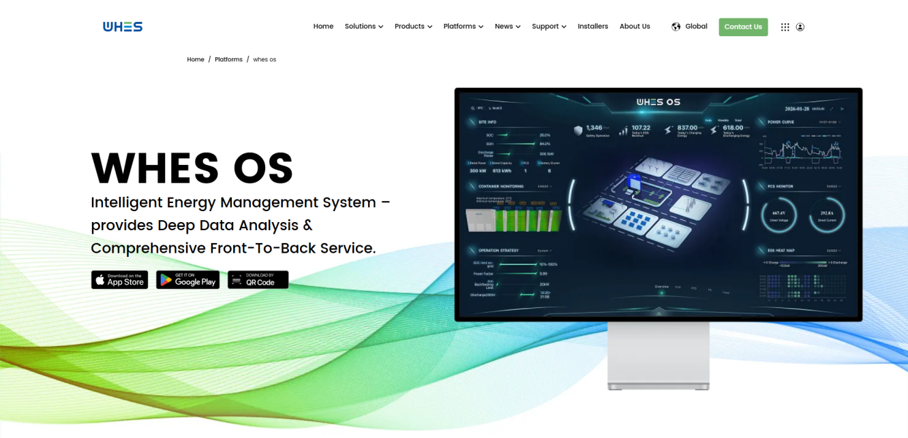
WHES OS introduces an AI Agent capable of understanding instructions expressed in natural language. For example, a facility manager could ask the system to prioritize electricity supply for an urgent production order. The platform can translate that requirement into operating rules, such as reserving additional battery capacity, limiting nonessential discharge, and maintaining a suitable safety margin.
The WHES AI also enhances the forecasts through probabilistic forecasting and multi-source weather data fusion. Rather than providing only a single predicted value, the engine presents a range of possible outcomes, helping businesses better anticipate fluctuations in renewable generation and electricity demand.
With combined data from production schedules, electricity tariffs, battery state of charge, and load and solar generation forecasts, WHES OS can then create optimization objectives that users can prioritize according to changing requirements. This makes it suitable for peak-valley arbitrage, demand control, renewable self-consumption, backup power, and energy-storage revenue optimization.
In addition, WHES OS can clarify why it made a dispatch decision and replay the factors that influenced it. This provides greater transparency than a black-box optimization model and helps operators evaluate performance.
For businesses that already operate energy equipment or third-party management systems, WHES also provides API support for seamless integration.
2.BYD DiCS-EMS60
BYD DiCS-EMS60 is an energy management system designed for energy storage power stations, using AI-powered algorithms to predict energy demands. Based on a three-layer and two-network architecture, it provides real-time data acquisition, system monitoring, energy optimization, and coordinated power control.
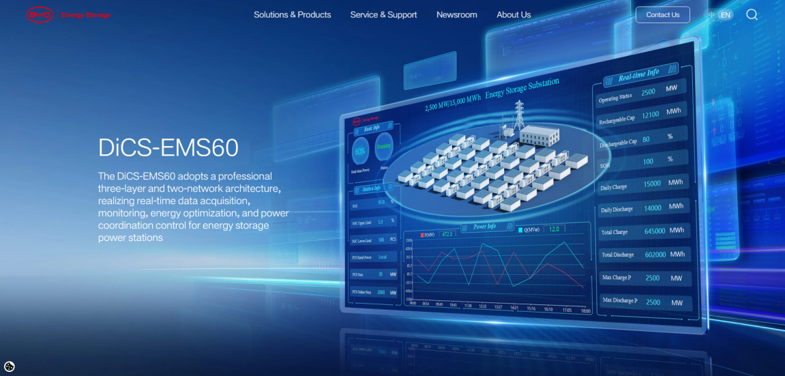
The platform supports customized intelligent strategies, including fluctuation suppression, inertia support, primary frequency regulation, planned curve tracking, reverse power flow prevention, and demand control. It also provides full-life-cycle management for microgrids, transformer districts, photovoltaic systems, energy storage, and auxiliary systems.
DiCS-EMS60 is compatible with various protocols used in photovoltaic-storage systems and microgrids. The system can provide access to over five million real-time data points, support a maximum single-station capacity of 15 GWh, and achieve a strategy calculation period of no more than 50 milliseconds.
These capabilities make DiCS-EMS60 relevant to large and data-intensive energy storage projects requiring real-time monitoring and coordinated control.
3.Sungrow iSolarCloud
Sungrow iSolarCloud is a cloud-based smart energy management platform for photovoltaic and energy storage systems. It provides centralized visibility through web and mobile interfaces, making it convenient for owners, installers, and operators managing one or multiple sites.
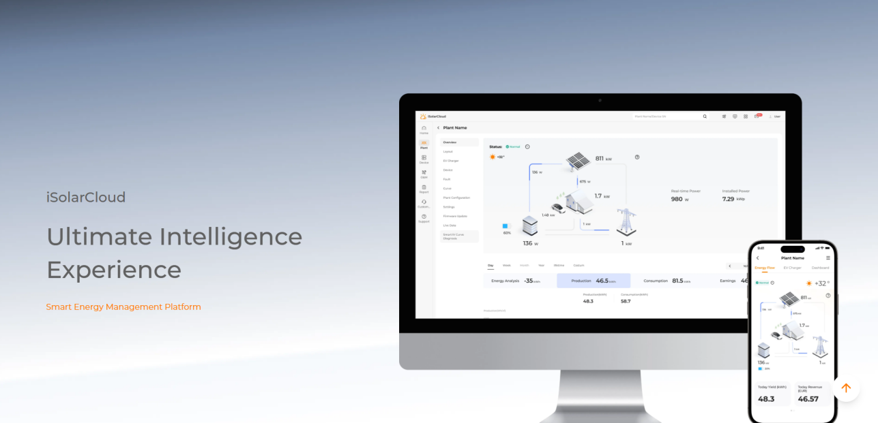
Its AI-powered energy management functions dynamically optimize energy use using weather forecasts, real-time electricity pricing, and consumption patterns. For C&I users, these capabilities can improve solar self-consumption, battery scheduling, and overall energy efficiency.
iSolarCloud also places strong emphasis on operation and maintenance. It offers real-time fault alerts, automated diagnostics, battery health pre-alarms, and an AI troubleshooting copilot. These tools can help maintenance teams identify problems earlier, reduce investigation time, and manage distributed assets more efficiently.
The platform also provides customizable dashboards, straightforward cloud onboarding, permission controls, encrypted backups, disaster-recovery measures, and traceable operational records. Its intuitive interface makes it attractive to businesses that prioritize accessible monitoring and streamlined maintenance alongside AI-assisted optimization.
Conclusion
In short, WHES OS stands out for its AI Agent, probabilistic forecasting, explainable dispatch decisions, and flexible system integration. BYD DiCS-EMS60 is well suited to large, data-intensive energy storage projects that require fast strategy calculation and coordinated power control. Sungrow iSolarCloud combines AI-powered energy optimization with accessible monitoring and comprehensive O&M capabilities. These AI-powered energy management systems help C&I facilities respond more effectively to fluctuating electricity prices, variable renewable generation, and changing energy demand.