
Blog
5 Best Residential Energy Management System Platforms for VPP Integration
Virtual Power Plant (VPP) integration allows residential energy assets (such as residential ESS, solar systems, EV chargers, etc.) to operate as part of a coordinated energy network. It helps homeowners participate in demand response programs, optimize self-consumption, and support grid flexibility.
In this process, the Energy Management System (EMS) platform acts as the control layer between household devices and third-party VPP operators. Without a capable EMS, even the best home energy storage system may remain isolated, underutilized, or unable to respond accurately to external dispatch commands.
The five residential EMS platforms below were compared based on VPP dispatch capability, AI-driven optimization, monitoring depth, open integration, and cost to the homeowner. Read on to learn how they support VPP integration.
Quick Overview
- sonnenVPP Software
- WHES ECOS
- Sungrow iSolarCloud
- AlphaESS AlphaCloud
- mySolarEdge
1. sonnenVPP
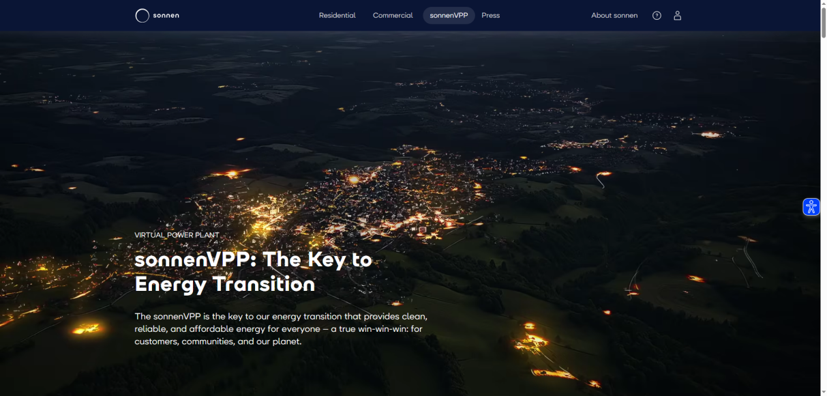
sonnenVPP is developed by sonnen, a company founded in Wildpoldsried, Germany, in 2010. The sonnenVPP software connects networks of residential batteries and coordinates them as one dispatchable virtual power plant, turning distributed home storage systems into grid-support assets that can respond to external dispatch needs, provide balancing power, and participate in structured energy programs.
What stands out:
- In Germany, sonnenVPP was the first large-scale virtual power plant built from home energy storage systems to provide balancing power, making sonnen one of the global pioneers in this technology.
- In the US, sonnenVPP was deployed in a 600-plus-unit apartment community, where more than 5 MW of solar power is generated, stored for on-site use, and dispatched to reduce peak grid pressure.
- In the UK, sonnen received top-level certification from the national grid operator and directly integrated more than 100 sonnen batteries into its virtual power plant for grid-connected operation.
2. ECOS / ECOS Hub
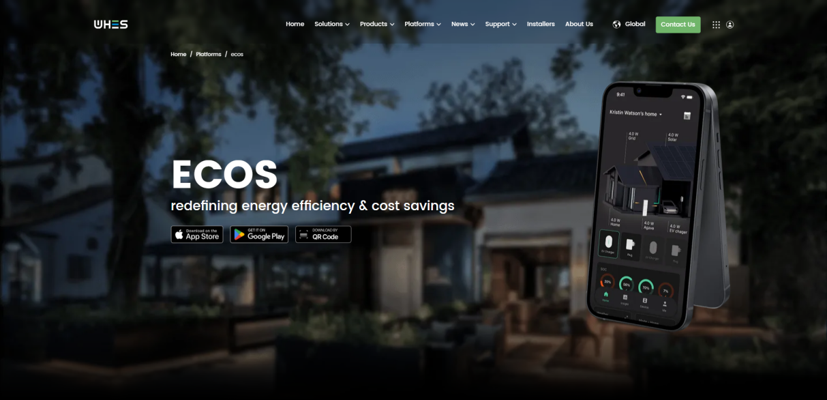
ECOS (for homeowners) and ECOS Hub (for installers) are developed by WHES, a company founded in 2017 and based in Wuxi, China. The ECOS residential EMS platform is designed to coordinate home energy devices such as batteries, heating systems, and switching functions through one app. It emphasizes active energy control, dynamic tariff response, and participation in VPP-related dispatch scenarios.
What stands out:
- ECOS provides full-chain home energy visibility through a mobile app, including energy flow diagrams, PV generation curves, battery SOC, and key operating data.
- Based on PV forecasting and household load forecasting, ECOS automatically optimizes charging and discharging strategies. It can also analyze dynamic electricity tariff trends and generate adaptive energy management strategies to maximize self-consumption and reduce electricity costs.Its AI-based forecasting can predict solar generation and optimize charging and discharging strategies according to household energy habits and tariff conditions.
- ECOS supports seamless management of EV chargers while enabling remote control of conventional appliances through smart plugs.
- The WHES OpenAPI offers open capabilities for ECOS Hub so , customers can flexibly scale and build customized energy storage management solutions.
3. iSolarCloud
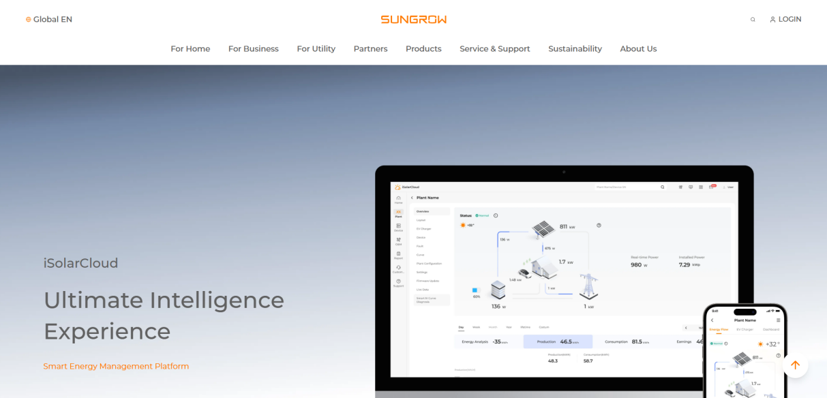
iSolarCloud is developed by Sungrow, a company founded in 1997 and headquartered in Hefei, China. As Sungrow’s monitoring and management platform, iSolarCloud supports residential PV, energy storage, and EV charging configurations. The platform is designed to help users and operators monitor generation, load, battery status, and system performance across distributed assets.
What stands out:
- Its Dynamic Tariff feature uses self-developed AI to predict generation and demand 24 hours ahead, then autonomously executes cost-effective consumption and trading strategies.
- A Frank Energy partnership aggregates residential PV and storage into a dispatchable resource pool for European market trading.
- IV online diagnostic technology identifies 23 fault types with over 97% accuracy, supporting remote troubleshooting across large installed fleets.
4. AlphaCloud
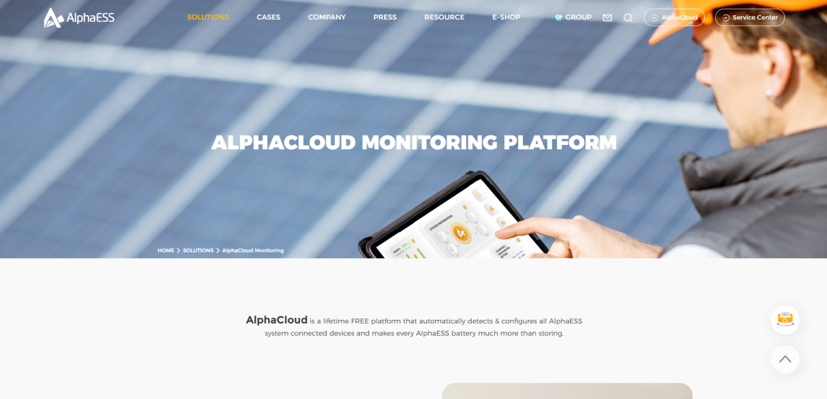
AlphaCloud is developed by AlphaESS, a company founded in 2012 and based in Nantong, China. AlphaCloud serves as the company’s cloud-based monitoring and energy management platform, giving users and operators visibility into PV generation, household load, battery state of charge, and system operation through both web and app access. For residential VPP applications, AlphaCloud combines monitoring, scheduling, remote updates, and API-enabled control.
What stands out:
- Lifetime-free access with remote firmware updates, charge/discharge scheduling, and VPP participation built in.
- An AI algorithm predicts PV generation to maximize user revenue and supports predictive maintenance from the same dashboard.
5. mySolarEdge
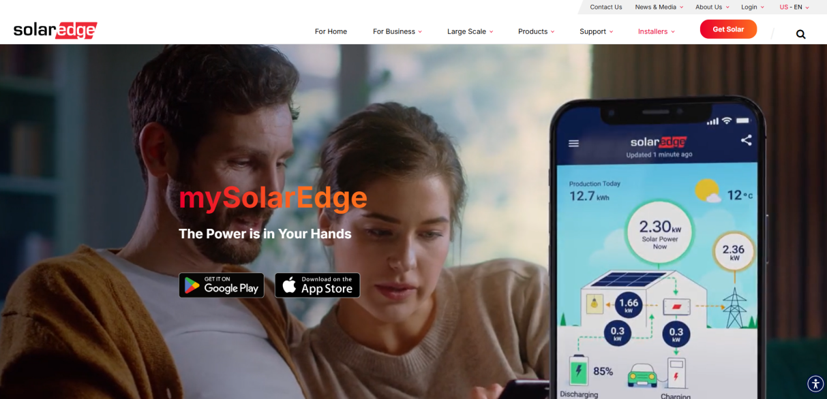
mySolarEdge is developed by SolarEdge, a company founded in 2006 in Herzliya, Israel. The mySolarEdge app gives residential system owners and operators access to monitoring and control functions for solar, storage, and EV charging. Within the SolarEdge ecosystem, the platform connects hardware performance data with AI-based scheduling and energy optimization features.
What stands out:
- WeatherGuard detects severe weather and charges the battery to full before the grid goes down, extending backup runtime.
- Real-time power-flow illustration plus panel-level layout views surface underperforming modules across the PV array.
Conclusion
Residential VPP integration depends not only on batteries or solar hardware, but also on the EMS platform that connects, monitors, and controls distributed home energy assets. For homeowners, installers, and energy service providers, the right choice relies on hardware compatibility, regional program availability, openness to third-party dispatch, and the level of control required for future VPP participation.